Glacier National Park packs 1,012,837 acres of jagged peaks, 762 lakes, and 26 shrinking glaciers into Montana's northwest corner, and no single trip covers all of it. Most visitors build their days around one road, a handful of trails, and a lake or two — the trick is knowing which ones earn the time. This guide runs through the park's core activities, from driving Going-to-the-Sun Road over 6,646-foot Logan Pass to hiking, boating, and watching grizzlies from a safe distance, then folds it all into sample plans by trip length. New here? Start with the park's history and visitor basics.
When to Go & How Many Days You Need
Mid-July through early September is the safest window for a first trip, once snow has cleared most trails and Going-to-the-Sun Road is fully open. The road typically opens in full by mid-to-late June and closes for the season in mid-to-late October, though exact dates shift with snowfall — some years it runs into early November, others it shuts earlier. June rewards early birds with waterfalls at full flow and green meadows, but expect lingering snow on high routes like the Highline Trail. September trades some of those waterfalls for golden larches and noticeably thinner crowds.
How long you need depends on what you want to see. One day is enough to drive the full length of Going-to-the-Sun Road and fit in an easy hike like Avalanche Lake, but you'll only scratch the west side. Three to five days lets you add Many Glacier and Two Medicine without rushing between them. Winter visitors get a different park entirely: only the road sections near West Glacier and St. Mary stay plowed, with snowshoeing and cross-country skiing filling in for hiking and driving.
Entry Basics: Fees, Passes & the 2026 No-Reservation Update
A standard entrance pass costs $35 per private vehicle in summer ($25 in winter, November through April), valid for seven consecutive days — pay by card only, since the park takes no cash. Entering on foot or by bike runs $20 in summer ($15 in winter) per person 16 and up, and an annual Glacier pass costs $70 if you'll be back within the year. Non-US residents 16 and older pay an extra $100 per person unless they're using an annual or America the Beautiful pass. Full fee and pass details sit on our hours and fees page.
The biggest change for 2026: no vehicle reservation is required anywhere in the park, including Going-to-the-Sun Road, Many Glacier, Two Medicine, and the North Fork. That reverses the ticketed-entry system that ran for several summers before it, so double-check before you go — plenty of older blog posts still describe the old rules. The catch is a new pilot at Logan Pass: a three-hour parking limit, plus an optional ticketed express shuttle straight to the trailheads there. Parking still fills fast regardless of any reservation system — arrive before 7am if Logan Pass or Avalanche Lake is on the list.
Drive (or Ride) the Going-to-the-Sun Road
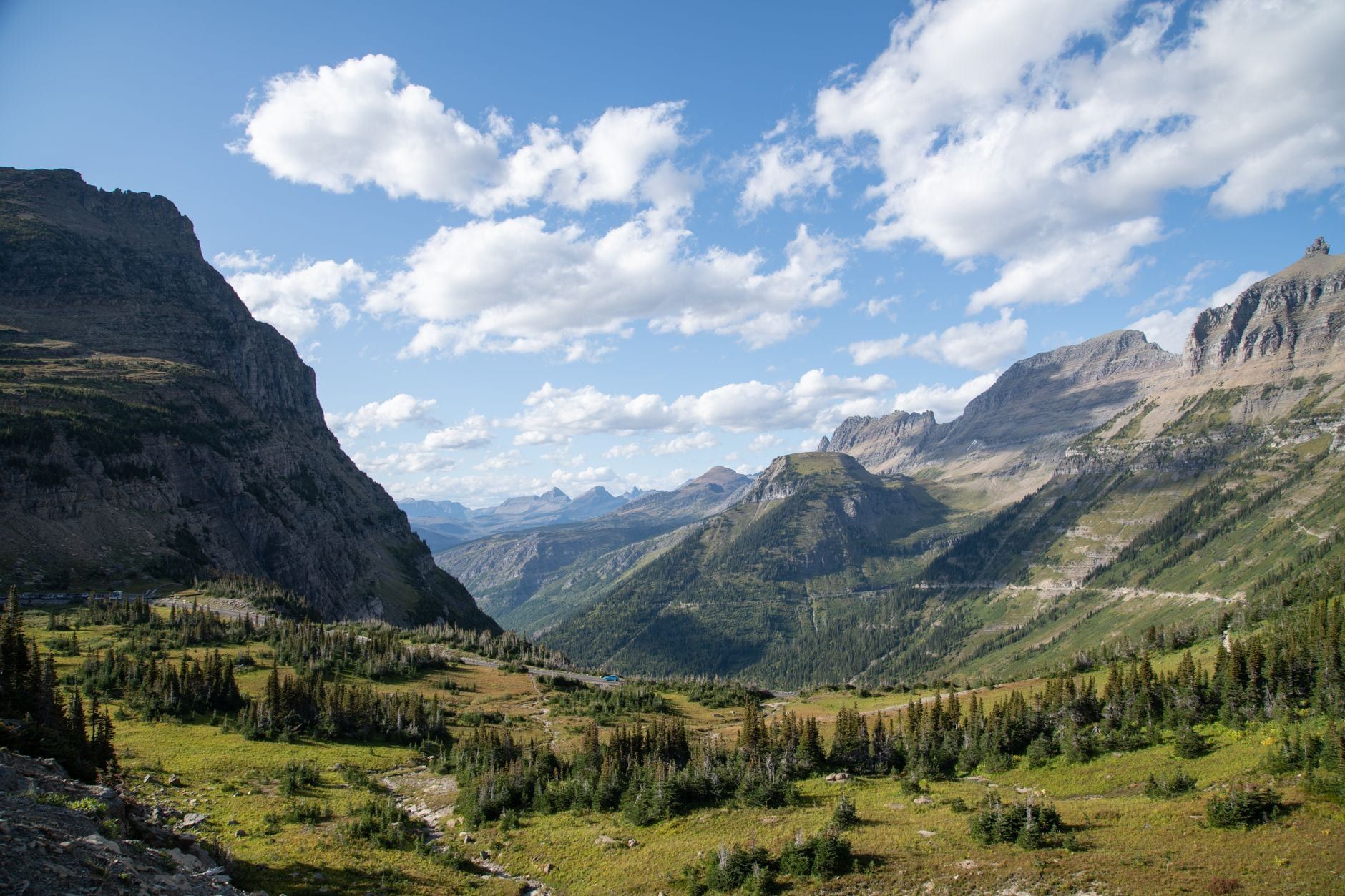
Going-to-the-Sun Road is Glacier's spine, a 50-mile National Historic Landmark connecting West Glacier to St. Mary over the Continental Divide. It climbs from Lake McDonald's shoreline through cedar forest, switchbacks along cliffs cut into solid rock, and tops out at Logan Pass, 6,646 feet up, where alpine tundra opens out on both sides. Give the drive at least two to three hours one-way with stops, more if you're hiking from the pass.
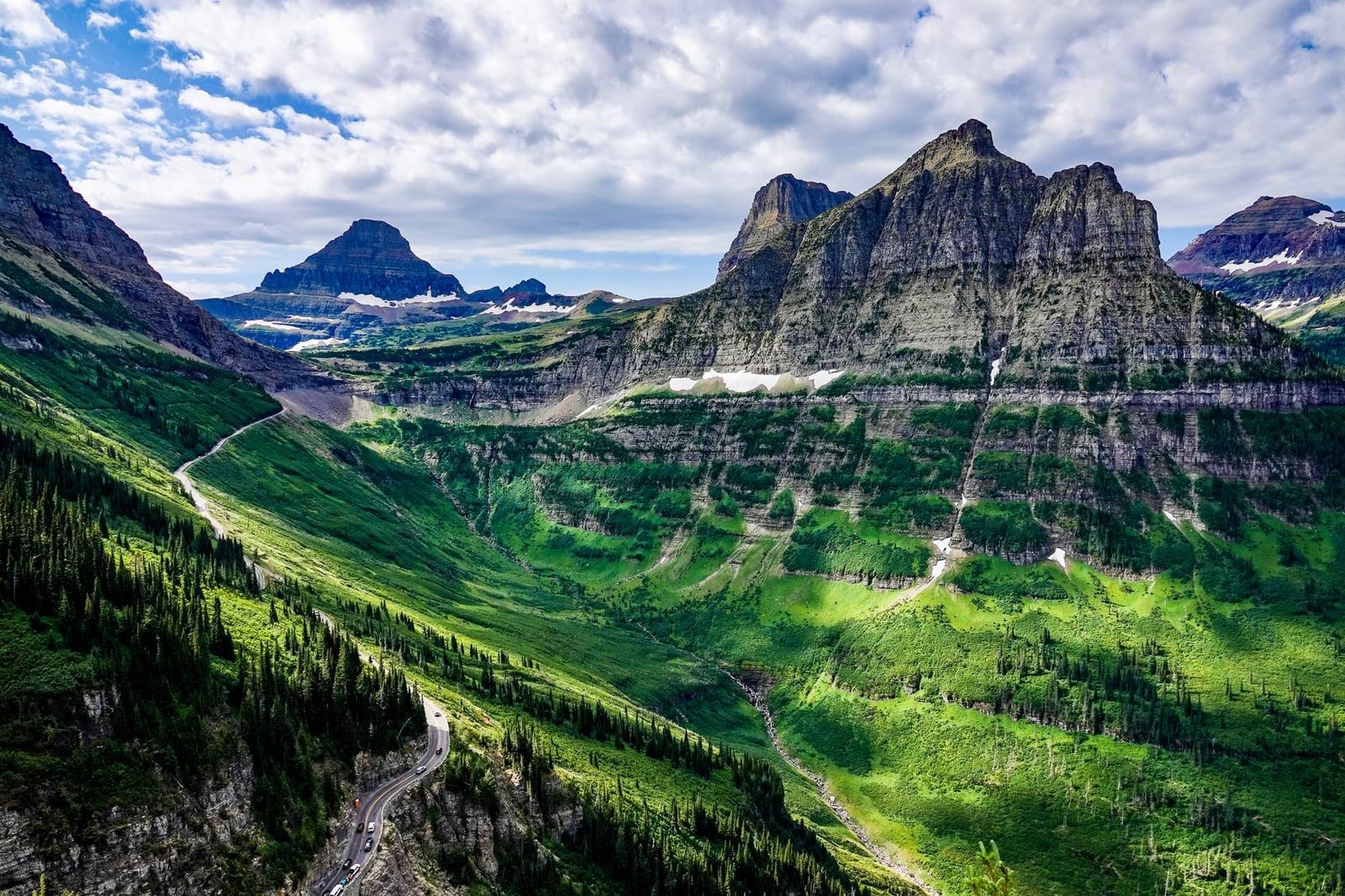
- The Loop: the road's only hairpin switchback, with a trail up to Granite Park Chalet
- Weeping Wall: snowmelt sheets across the road in early summer, sometimes onto your windshield
- Jackson Glacier Overlook: the easiest roadside view of an actual glacier
- Wild Goose Island: the small pine-covered islet behind every Glacier postcard
Riders who'd rather not drive it themselves can book Red Bus Tours, which use the park's restored 1930s vehicles with roll-back canvas tops, or Sun Tours, an interpretive minibus trip built around Blackfeet history and perspective on the landscape. Both sell out in peak season — book through our driving tours page or direct with the operators. Behind the wheel yourself, remember the road bans vehicles over 21 feet long or 8 feet wide between Avalanche Creek and Rising Sun, and cyclists share the same narrow shoulders, so take blind curves slow.
The Best Hikes, From Easy Strolls to All-Day Treks
Glacier has 734 miles of maintained trail, more than enough to fill a week without repeating a step. Below is a range by effort, plus a quick-reference table for comparing distance and elevation before you commit. For trail-by-trail detail beyond this list, our complete hikes guide by region breaks down every major route.
Easy: Trail of the Cedars and Avalanche Lake
Trail of the Cedars is a flat, wheelchair-accessible boardwalk loop through old-growth cedar and hemlock, barely a mile long — a good leg-stretch, or a full outing for anyone who can't manage elevation gain. Most hikers use it as the launch point for Avalanche Lake, a 4.5-to-5.9-mile round trip (depending on where you start counting) that follows a slot-canyon creek to a lake ringed by waterfalls falling straight off the Continental Divide. It's crowded by 9am in July, so go earlier or later.
Moderate: Hidden Lake Overlook
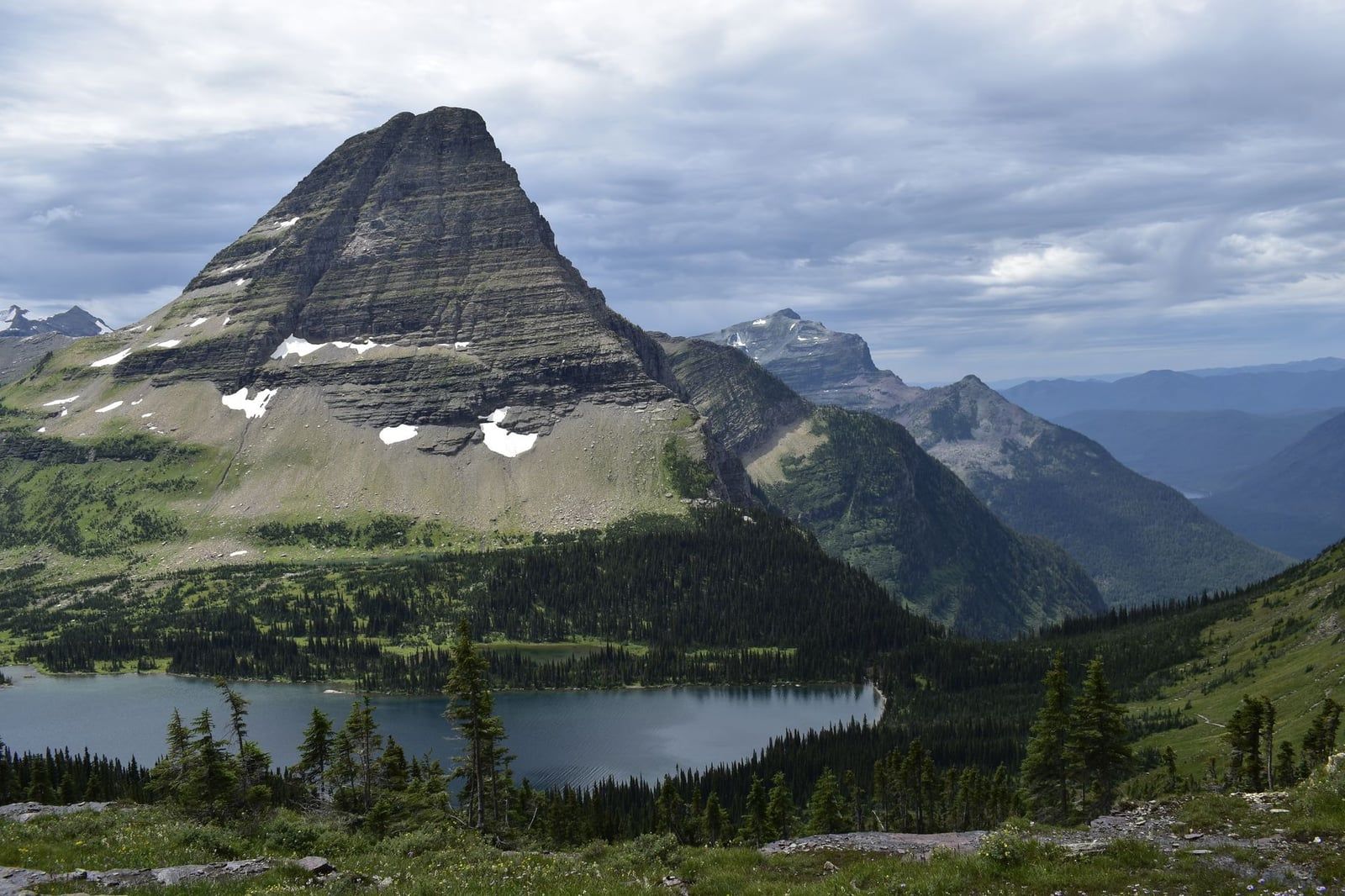
The boardwalk from Logan Pass Visitor Center climbs about 460 feet over 1.4 miles to the Hidden Lake Overlook, passing mountain goats and bear-grass meadows on the way, with a turquoise lake spread out below at the end. Push on past the overlook and it's 5.1 miles round trip down to the lakeshore itself. Short for the payoff, this is the single most rewarding hike in the park relative to the effort.
All-Day: Highline Trail and Grinnell Glacier
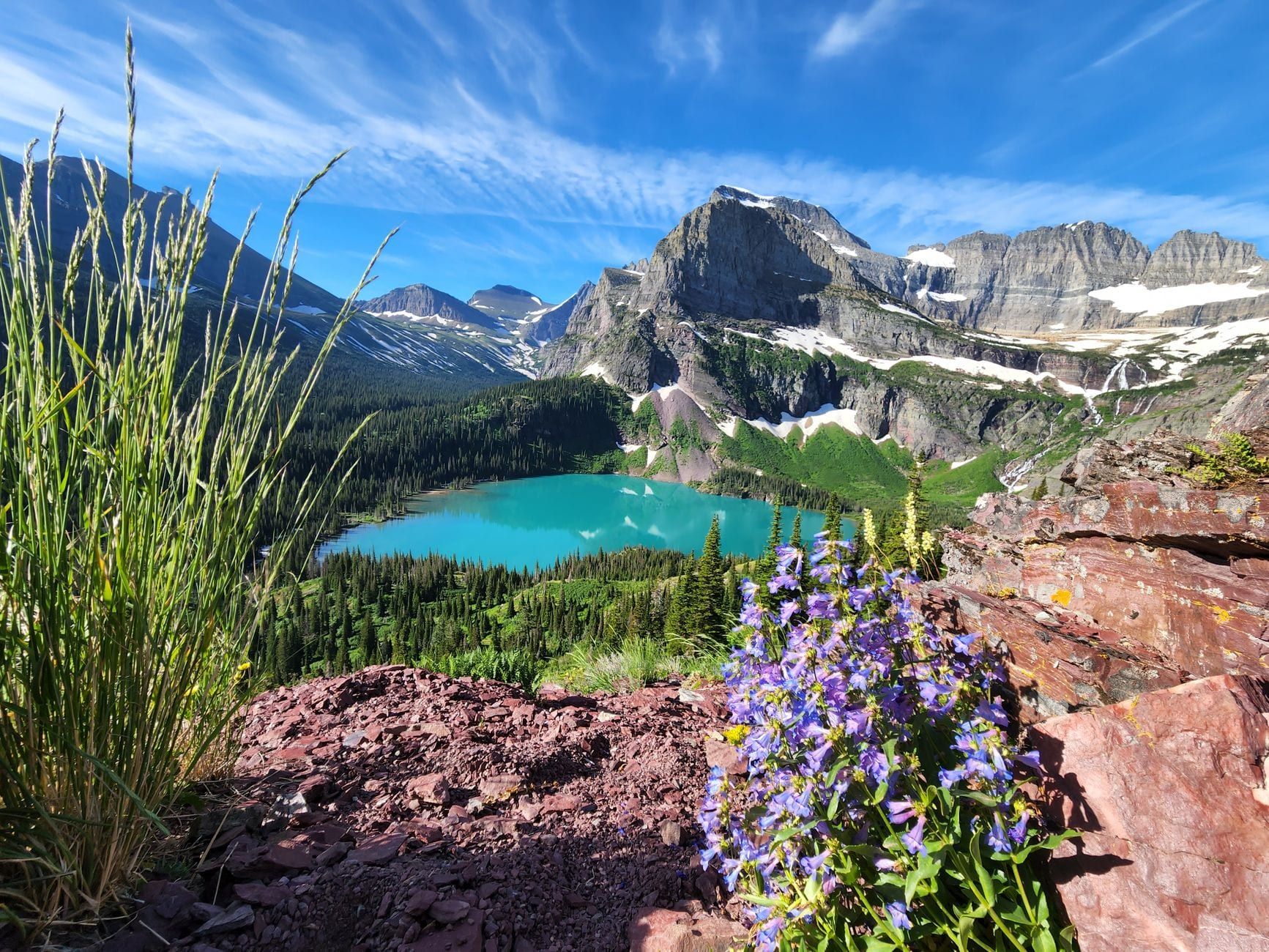
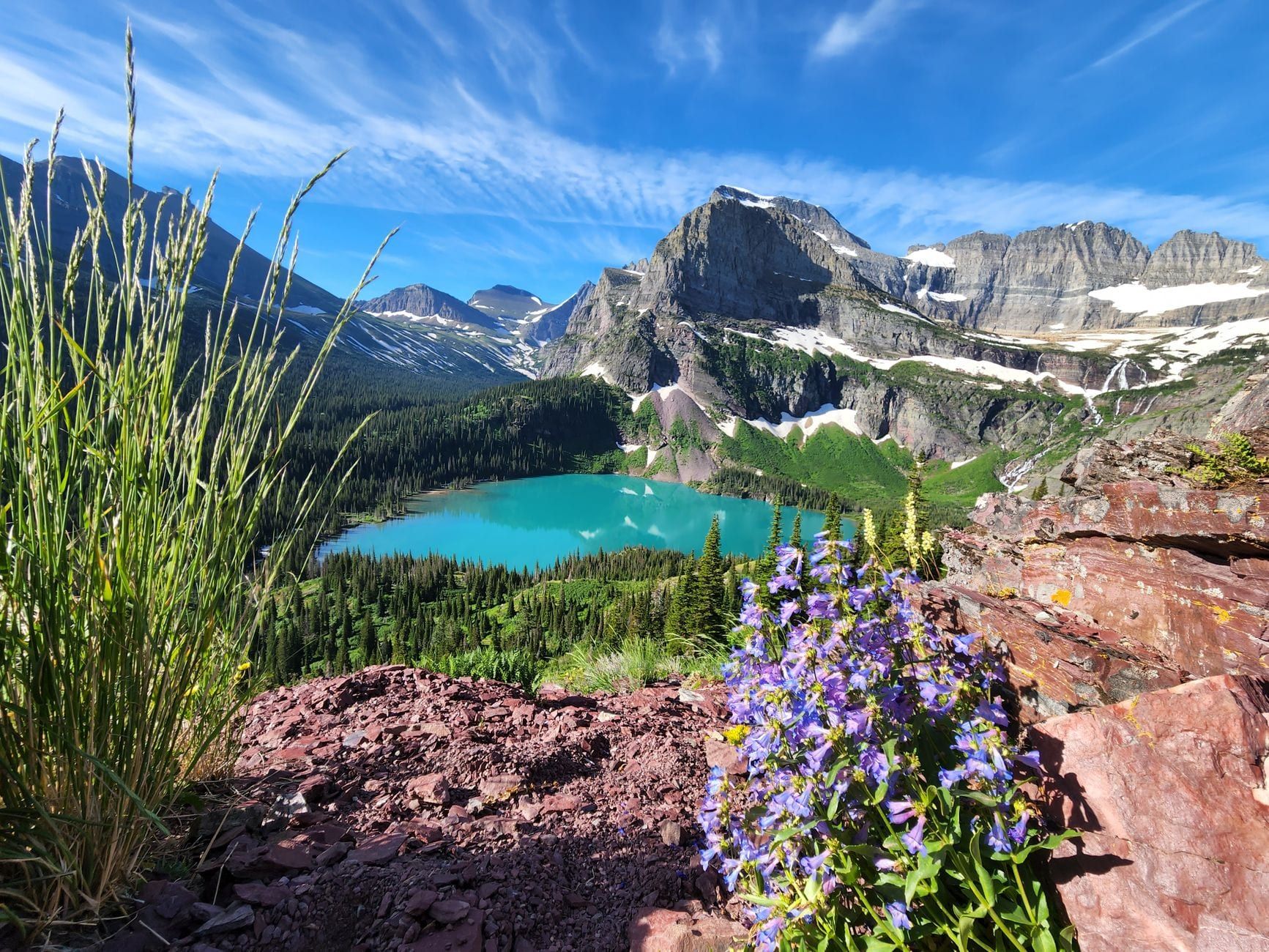
The Highline Trail runs 11.8 to 14.9 miles one-way from Logan Pass along the Garden Wall's exposed ledge to Granite Park Chalet and the Loop trailhead — the cliffside first mile and full logistics are in our Highline Trail guide. Grinnell Glacier Trail, out of Many Glacier, is about 10.6 miles round trip with 1,600 feet of climbing to a milky lake beneath the glacier itself, though a Glacier Park Boat Company shuttle across Swiftcurrent Lake and Lake Josephine trims it to roughly 7.6 miles. Rangers lead free guided hikes most summer days, often six or more options across the park, and none require signing up in advance.
| Trail | Distance | Elevation Gain | Trailhead |
|---|---|---|---|
| Trail of the Cedars | 0.9 mi loop | Flat | Avalanche Creek |
| Avalanche Lake | 4.5–5.9 mi round trip | — | Avalanche Creek |
| Hidden Lake Overlook | 2.8 mi RT (5.1 mi to lakeshore) | ~460 ft | Logan Pass |
| Highline Trail | 11.8–14.9 mi one-way | — | Logan Pass |
| Grinnell Glacier Trail | 10.6 mi RT (7.6 mi via boat) | ~1,600 ft | Many Glacier |
Get on the Water: Boat Tours, Kayaking & Fishing
Glacier holds 762 lakes, and several are set up for exploring without a hike. Glacier Park Boat Company runs narrated tours on Lake McDonald, St. Mary Lake, Two Medicine Lake, and the Many Glacier pair of Swiftcurrent Lake and Lake Josephine, and rents kayaks, canoes, paddleboards, and small motorboats at most of those docks. An hour on St. Mary Lake at sunset, watching the Wild Goose Island islet backlit by the Livingston Range, does more for the memory than most hikes.
Fishing needs no license inside park boundaries, just an awareness of catch limits and rules that vary by lake and stream — pick up current regulations at any visitor center. The season generally runs mid-May through the end of November. Bring your own tackle; there's nowhere to rent gear inside the park itself.
Wildlife Watching & Bear Safety
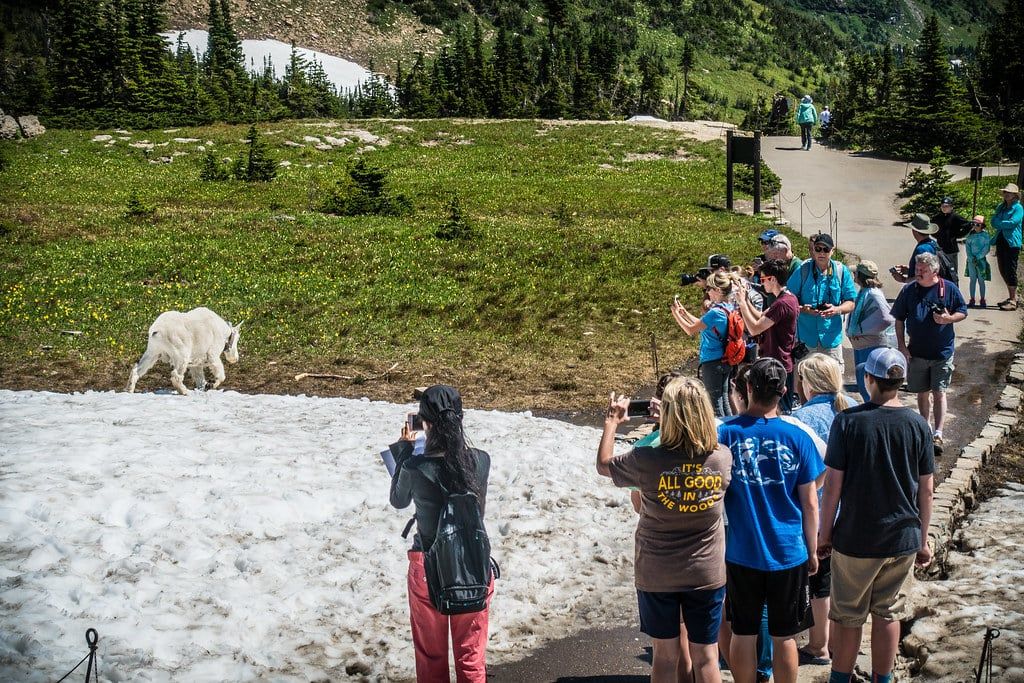
Glacier's wildlife list runs to 71 mammal species, and the ones visitors most want to see are mountain goats, bighorn sheep, moose, and both black and grizzly bears. Roughly 1,500 mountain goats live in the park — fittingly, since the goat is the park's official symbol — and they're often visible right along the Hidden Lake Trail and at Logan Pass itself. Fishercap Lake, a short flat walk from the Many Glacier picnic area, is one of the more reliable spots for moose at dawn or dusk.
Grizzlies are the reason bear spray isn't optional here. Park rules require staying at least 100 yards from bears and wolves, and a can of EPA-registered spray, carried where you can reach it in under two seconds, is standard advice for every hike. It can't go in checked or carry-on luggage, so flying visitors buy or rent it in West Glacier or St. Mary rather than packing it from home. Black bears run smaller with a straighter facial profile and no shoulder hump; grizzlies have the hump, a dished face, and longer front claws — worth learning before you're anywhere near one.
Biking and Horseback Riding
Every spring, before Going-to-the-Sun Road opens to cars, cyclists get a window to ride the closed upper sections car-free, with shuttle services available to get riders back to their vehicles. Once the road opens to traffic, biking it means sharing narrow shoulders with RVs, so early morning is the safer, quieter time to do it. Our bike tours page covers guided and e-bike options if you'd rather skip the logistics.
Swan Mountain Outfitters runs horseback rides from one hour to full-day out of three corrals inside the park: Apgar, Lake McDonald Lodge, and Many Glacier. It's a good option for anyone who wants the high country without the climb — the Many Glacier rides in particular pass through prime grizzly and moose habitat.
Ranger Programs, Visitor Centers & Stargazing
Three visitor centers anchor the park — Apgar, Logan Pass, and St. Mary — each staffed by rangers who'll help build a same-day plan, plus exhibits and a bookstore. All three run free evening talks in summer, and the Native America Speaks program brings Blackfeet, Salish, and Kootenai speakers to tell the park's story from the perspective it usually misses.
Half the Park Happens After Dark is the park's free ranger-led stargazing program, held most clear nights from the Apgar and St. Mary Visitor Center parking lots — Glacier's remoteness means genuinely dark skies once the sun's down. History fans can also join a free, no-reservation ranger tour of the 1915 Many Glacier Hotel, run daily at 4pm from mid-June through mid-September.
Where to Stay & What to Eat Inside the Park
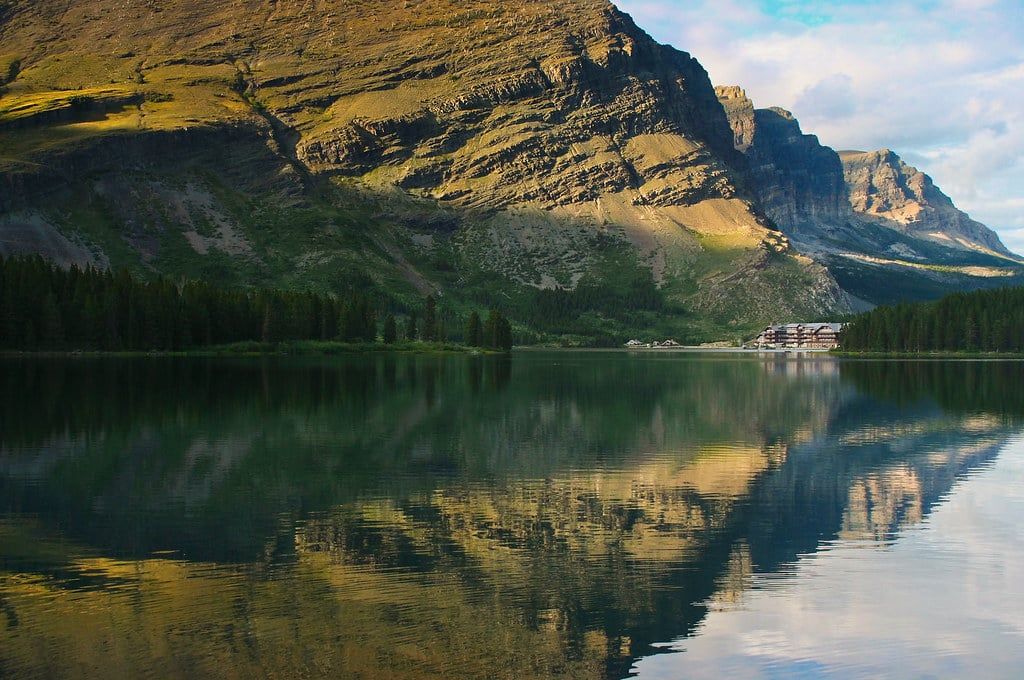
Many Glacier Hotel, built in 1915 on the edge of Swiftcurrent Lake, and Lake McDonald Lodge, on the park's west side, are Glacier's two flagship historic lodges — book six to thirteen months out for summer if either is on your list. Village Inn at Apgar and Swiftcurrent Motor Inn are the simpler, cheaper alternatives, and staying inside the park at either end cuts out the hour-plus commute from gateway towns like Whitefish or Kalispell to reach dawn trailheads.
Huckleberry season runs mid-to-late July through early September, and the tart purple berries turn up in pie, ice cream, and syrup at nearly every park lodge and gateway-town cafe. Polebridge Mercantile, on the quieter North Fork side, bakes its huckleberry bear claws from scratch daily — worth the rough road in if you're staying near Apgar.
Camping & Backcountry Adventures
Glacier runs 13 campgrounds totaling 1,009 sites, and most are first-come-first-served — arrive by mid-morning in July and August, or plan on circling the loop waiting for a spot to clear. A handful of the larger campgrounds take reservations through Recreation.gov, worth grabbing the moment they open if your dates are fixed.
Backcountry camping requires a wilderness permit year-round, available through the park's Wilderness Permit Office. For a roof without a road, Granite Park Chalet and Sperry Chalet are hike-in-only lodges, with bookings opening each January and selling out within days. Anyone without backpacking gear or experience can hire a guiding outfit for a fully outfitted multi-day trip instead.
Beyond the Park: Day Trips & Nearby Adventures
The Middle Fork Flathead River, along the park's southern boundary, is where outfitters run whitewater trips from a couple of hours to multi-day, plus fly-fishing float trips on calmer stretches. Book a half-day run through our rafting tours if an afternoon on the water sounds better than another trailhead.
Waterton Lakes National Park, Glacier's Canadian twin across the border, is roughly an hour's drive north from the Many Glacier entrance (bring a passport and budget time for customs) and delivers the same peaks dropping into prairie, just from the other side. Whitefish, about 30 minutes from West Glacier, has the restaurants and breweries the park itself doesn't, plus a lake of its own for an easy swim. Flathead Lake, roughly an hour south, adds cherry orchards and small lakefront towns for a full change of scenery.
Choose Your Own Adventure: Sample Plans by Trip Length
With one day, drive the full 50 miles of Going-to-the-Sun Road west to east (or back), stopping at Logan Pass and Jackson Glacier Overlook, and fit in one easy hike — Avalanche Lake if you're based near West Glacier, Hidden Lake Overlook if you start at Logan Pass. That's a full day on its own; don't try to add Many Glacier too.
Two to three days is enough to add a Many Glacier boat tour across Swiftcurrent Lake and Lake Josephine, then either the Grinnell Glacier hike or the Highline Trail, depending on how much elevation you want. Stay on the east side for at least one night to skip the drive back over the pass, or book a guided version through our Glacier National Park tours if you'd rather not plan the logistics yourself.
Four to five-plus days lets you add Two Medicine's quieter trails and boat tour, a night at a backcountry chalet or campground, and a day trip north to Waterton or south to Whitefish. This is the pace that actually matches the park's size.
| West Side (Lake McDonald / Apgar) | East Side (Many Glacier / St. Mary / Two Medicine) | |
|---|---|---|
| Feel | Forested, lower elevation, the park's busiest corridor | Open alpine terrain, often called the 'Switzerland of North America' |
| Best for | First-timers, easy hikes, sunset on Lake McDonald | Wildlife, Grinnell Glacier, and the Highline Trail |
| Getting there | Closest to Glacier Park International Airport and Whitefish | Closer to Great Falls, a longer drive from most airports |
| Historic lodge | Lake McDonald Lodge | Many Glacier Hotel |
What to Pack
Mountain weather at Logan Pass can run 20 degrees colder than Lake McDonald and swing from sun to snow flurries within an hour, even in July, so layers matter more than any single piece of gear.
- Bear spray, worn on a hip belt or pack strap, not buried inside
- Rain jacket and warm layers, even for summer day hikes
- Waterproof hiking boots — trails stay muddy well into July
- Sun protection; high-elevation UV is stronger than it looks
- Microspikes or crampons for hikes before late June, when snow lingers
Frequently asked questions
How many days do you need in Glacier National Park?
Budget at least two to three days to drive Going-to-the-Sun Road and fit in a couple of hikes. Three to five-plus days lets you add Many Glacier, Two Medicine, and the west side without rushing; one day works if you only want the road and a single short hike.
Do I need a vehicle reservation to enter Glacier National Park in 2026?
No. The National Park Service suspended vehicle reservations parkwide for 2026, covering Going-to-the-Sun Road, Many Glacier, Two Medicine, and the North Fork. You still need a standard entrance pass ($20-$35), and the park can temporarily divert traffic during congestion.
What is the best time of year to visit Glacier National Park?
Mid-July through early September, once Going-to-the-Sun Road is fully open and most high trails have cleared of snow. The road typically opens by mid-to-late June and closes mid-to-late October.
Do you need a fishing license to fish in Glacier National Park?
No license is required inside park boundaries, though anglers must follow park-specific catch limits and rules that vary by lake and stream. The season generally runs mid-May through the end of November.
Is bear spray really necessary in Glacier National Park?
Yes. Glacier has one of the densest grizzly populations in the Lower 48, and EPA-registered bear spray is standard advice for every hike. It can't travel in airline carry-on or checked luggage, so fly-in visitors buy or rent it near the park instead.
What's the one thing to prioritize in Glacier National Park?
Driving the 50-mile Going-to-the-Sun Road over 6,646-foot Logan Pass. It's the park's only route across the Continental Divide and the experience nearly every itinerary is built around.
Can you still see actual glaciers in Glacier National Park?
Yes, though the park's 26 named glaciers have all shrunk substantially. Grinnell Glacier Trail gets you closest on foot, and Jackson Glacier Overlook along Going-to-the-Sun Road is the easiest roadside view.
Where should I stay inside Glacier National Park?
Many Glacier Hotel on the east side and Lake McDonald Lodge on the west are the flagship historic options. Village Inn at Apgar and Swiftcurrent Motor Inn cost less, and the park's 13 campgrounds (1,009 sites total) are mostly first-come-first-served.